
You are here
Famous Federal Trials
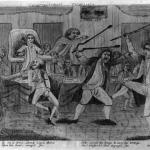 |
U.S. v. Lyon, U.S. v. Cooper, and U.S. v. Callender: The Sedition Act Trials – The rise of political parties and the threat of war raise questions about the rights of free speech and a free press.
Learn about the Case | PowerPoint Lecture | Student Handout | Other Resources |
 |
United States v. Smith and United States v. Ogden – Low politics and high diplomacy meet in the controversial trials of Federalists accused of violating American neutrality in the Age of Revolution. |
 |
U.S. v. Aaron Burr: The Treason Trial – John Marshall presides over the treason trial of a former vice president, and the subpoena of President Thomas Jefferson threatens the balance of judicial and executive authority.
Learn about the Case | PowerPoint Lecture | Student Handout | Other Resources |
 |
The Amistad: The Mende Slave Revolt – A group of enslaved Africans, who broke free of their captors, enter a federal court proceeding that will determine whether slave property rights are protected by federal law.
Learn about the Case | PowerPoint Lecture | Student Handout | Other Resources |
 |
Ex parte Merryman: Habeas Corpus During the Civil War – In the opening weeks of the Civil War, the Chief Justice of the United States publicly challenges President Lincoln to protect the civil liberties of a Confederate sympathizer.
Learn about the Case | PowerPoint Lecture | Student Handout | Other Resources |
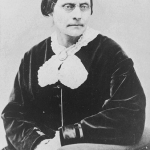 |
U.S. v. Susan B. Anthony: The Fight for Women's Suffrage – When the leading advocate of woman suffrage votes in a federal election, a federal court must decide what political rights are protected by the Constitution.
Learn about the Case | PowerPoint Lecture | Student Handout | Other Resources |
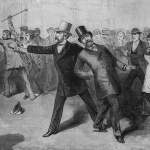 |
United States v. Guiteau: Assassination and Insanity in Gilded Age America – The first judicial trial of a presidential assassin forces the courts to defend their independence and define the bounds of criminal insanity. |
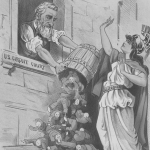 |
Chew Heong v. U.S.: Chinese Exclusion and the Federal Courts – A Chinese immigrant's petition to reenter the United States divides a California federal court and forces the Supreme Court to decide if immigrants' rights are protected by the nation's treaties.
Learn about the Case | PowerPoint Lecture | Student Handout | Other Resources |
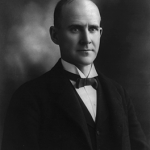 |
In re Eugene V. Debs: The Pullman Strike and American Railway Union Boycott – In the depths of an economic depression, government attorneys seek court orders to halt a strike, and labor leaders defend the right of unions to organize and represent the interests of workers.
Learn about the Case | PowerPoint Lecture | Student Handout | Other Resources |
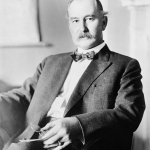 |
U.S. v. Albert B. Fall: The Teapot Dome Scandal – Corrupt deals for drilling rights in naval oil reserves spark a national scandal and give rise to a host of civil and criminal trials in the federal courts. |
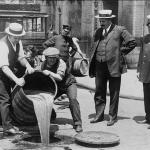 |
Olmstead v. U.S.: The Prohibition Trial of a Seattle Bootlegger – The trial of a well-known bootlegger increases public doubts about the "Noble Experiment" and presents the courts with questions about civil liberties in the age of telecommunications.
Learn about the Case | PowerPoint Lecture | Student Handout | Other Resources |
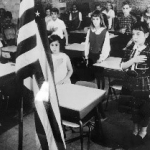 |
Gobitis v. Minersville School District and Barnette v. West Virginia State Board of Education: The Flag Salute Cases – School children objecting to flag salute laws in the 1930s and 40s challenge and then change the judiciary’s approach to the Constitution’s protection of freedom of conscience.
Learn about the Case | PowerPoint Lecture | Student Handout | Other Resources |
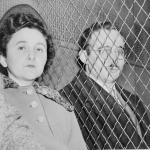 |
U.S. v. Julius Rosenberg: The Atomic Spy Trial – The trial of three Communists accused of conspiring to spy for the Soviet Union reflects fears of nuclear war, Soviet aggression, and Communist subversion during the Cold War. |
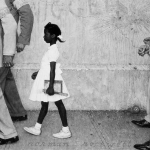 |
Bush v. Orleans Parish School Board: The Desegregation of New Orleans Public Schools – The federal courts' enforcement of the landmark Brown decision provokes a prolonged struggle over state and federal authority.
Learn about the Case | PowerPoint Lecture | Student Handout | Other Resources |
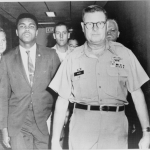 |
U.S. v. Cassius Clay: Muhammad Ali's Fight against the Vietnam Draft – Boxing legend Muhammad Ali objects to serving in the military in Vietnam, incurring the anger of the American public and risking a five-year prison term for his religious and political beliefs. |
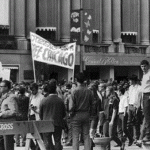 |
U.S. v. Dellinger: The Chicago Seven Conspiracy Trial – Organizers of demonstrations at the 1968 Democratic Convention are charged with inciting riots, and an unorthodox trial reflects the cultural and political divisions of the era of the Vietnam War.
Learn about the Case | PowerPoint Lecture | Student Handout | Other Resources |
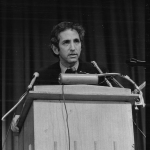 |
U.S. v. New York Times: The Pentagon Papers – The publication of secret government documents about the Vietnam War leads to a federal court conflict pitting national security against freedom of the press. |
Federal Trials and Great Debates in U.S. History
Since 2006, the Federal Judicial Center, in partnership with the American Bar Association Division for Public Education, has hosted Federal Trials and Great Debates, an annual summer institute for teachers of history, law, and government. Participants from across the country come to Washington, D.C., each June to meet with federal judges, scholars, and curriculum experts to examine the history of the federal judiciary and to study three historic cases in the federal trial courts. The materials on these cases, while designed for teachers, are valuable resources for all seeking to learn more about the role the federal judiciary has played in our nation’s history.
In 2020, the ABA and FJC partnered to hold a two-session virtual series about teaching Chew Heong v. United States: Chinese Exclusion and the Federal Courts and another series about Gobitis v. Minersville School District and Barnette v. West Virginia State Board of Education: The Flag Salute Cases. For each topic, the first session featured a scholar discussing the cases in their historical context and the second session featured experienced teachers sharing strategies for teaching the cases. Click here to watch recordings of the Chew Heong series and here to watch recordings of the Flag Salute series.
In 2021, the ABA and FJC created a four-video series on judicial independence. The series featured an overview of the topic and an examination of three key cases by a law professor, a discussion with two federal judges, and an analysis of primary sources by two FJC historians. Click here to watch recordings of the Federal Trials and Great Debates in U.S. History: Judicial Independence series.
For more information about Federal Trials and Great Debates, go to the American Bar Association Division for Public Education website.